



DIET Winter Training on English Teaching Skills and Lab Integration Concludes Successfully.
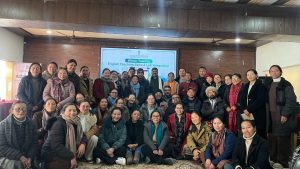
DIET Winter Training on English Teaching Skills and Lab Integration Concludes Successfully.
Leh, Ladakh — The DIET Winter Training Programme on English Teaching Skills and Lab Integration for Class VIII teachers from Government and Private Schools concluded with a valedictory function on 6 February 2026, after the successful completion of both training batches.
The programme brought together teachers from all six educational zones and private schools, with the objective of strengthening English grammar teaching—primarily tenses—through structured English lab integration, communication mastery for teachers, and CBSE Poorvi textbook-based pedagogy, aimed at improving classroom practices and student learning outcomes.
The valedictory event was graced by Shri Phuntsog Angchok, DEPO, as the Chief Guest, who shared that he had heard extensively about DIET and Golden Mile Learning’s training initiatives and expressed appreciation for being part of the programme. He commended the RTT indigenous trainers, Golden Mile Learning, and DIET faculty trainers for smooth and effective facilitation, applauded the programme’s success, and expressed his hope for many more such initiatives in the future.
The programme overview was presented by the District Supervisor, Golden Mile Learning, Ma’am Rinchen Angmo, highlighting the academic design, implementation process, and outcomes. The RTT indigenous trainers—Sir Stanzin Odzer, Sir Tundup Namgyal, and Sir Sonam Palden—along with DIET lecturers Sir Irfan Ul Salam and Sir Tsering Tundup, were specially acknowledged for their academic facilitation.
During the valedictory session, three participants, including one from a private school, shared reflections. A message from the Principal, Ladakh Public School, requested the Government to conduct more such professional development programmes in the future.
Ma’am Yangdol, HOD, DIET Leh, along with the Chief Guest, presented khadaks and appreciation gifts to the trainers and facilitators. The programme stood out as a strong model of collaborative capacity building, reinforcing the role of RTT-certified indigenous trainers in the region