



Director, Social & Tribal Welfare Department chairs consultative meeting on Nasha Mukt Bharat Abhiyan in Kargil.
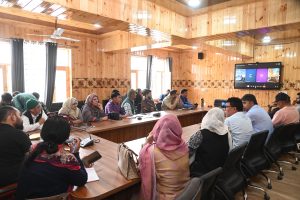
Director, Social & Tribal Welfare Department chairs consultative meeting on Nasha Mukt Bharat Abhiyan in Kargil.
Kargil, August 01, 2026: Director, Social & Tribal Welfare Department, UT Ladakh, Dr. Zahida Bano, JKAS, today chaired a consultative meeting with representatives of various government departments, social organizations, religious institutions, educational institutions and civil society organizations through virtual mode at the Conference Hall of the Cooperative Department, Kargil.
The meeting was convened to review and strengthen the implementation of the Nasha Mukt Bharat Abhiyan (NMBA) in the district. It was informed that the anti-drug campaign is ongoing across Ladakh, with continuous awareness programmes, preventive interventions, counselling services, community outreach activities and inter-departmental coordination being carried out to achieve the objective of creating a healthy and drug-free society. It was further emphasized that all programmes conducted, awareness activities organized, and action taken reports (ATRs) by the concerned departments and stakeholders shall be documented in detail and forwarded to the higher authorities for monitoring, evaluation and further necessary action.
Addressing the participants, Dr. Zahida Bano highlighted the importance of youth empowerment through education, skill development and employment opportunities as effective measures to prevent substance abuse. She informed the gathering about various Government schemes available for the youth, including RSETI (Rural Self Employment Training Institute) programmes, scholarship schemes, skill development initiatives and other welfare programmes aimed at enhancing employability, entrepreneurship and self-reliance among young people.
The Director emphasized that awareness alone is not enough and that all stakeholders must work collectively to address the root causes of drug abuse. She invited suggestions from representatives of social organizations, religious bodies, schools, health institutions and law enforcement agencies to formulate an effective district-level action plan and ensure effective implementation of the ongoing campaign.
During the interaction, several valuable suggestions emerged. The Health Department proposed conducting awareness and de-addiction programmes in educational institutions and communities, along with strengthening mental health counselling. Participants observed that during village and home visits, many affected individuals hesitate to disclose substance abuse, highlighting the need for greater trust-building and confidential counselling. The usefulness of drug detection kits in identifying commonly abused substances was also discussed.
Representatives of religious organizations stressed the importance of first understanding the cultural values, traditions and behavioural patterns of the community before designing awareness campaigns. It was also suggested that local short films carrying anti-drug messages be produced, with appropriate scripts reflecting local realities.
The meeting further recommended organizing inspirational storytelling sessions in schools, drawing and painting competitions, exhibitions, seminars, awareness rallies and community outreach programmes to actively engage students and the public in the anti-drug campaign. Participants also proposed involving reformed former addicts in awareness programmes to share their experiences and educate youth about the harmful consequences of substance abuse. The Police Department was requested to contribute inputs regarding local trends in drug abuse and supply networks to strengthen preventive strategies.
Dr. Zahida Bano appreciated the constructive suggestions received during the meeting and directed all concerned departments, educational institutions, religious organizations, civil society groups and implementing agencies to actively continue the ongoing campaign in a coordinated manner. She emphasized that every awareness programme, outreach activity, counselling session, community intervention, review meeting and other action taken under the Nasha Mukt Bharat Abhiyan should be properly documented with photographs, participant details and reports, and submitted to the competent higher authorities on a regular basis to ensure effective monitoring, coordination and achievement of the campaign objectives.
She called upon all stakeholders to work collectively and make the Nasha Mukt Bharat Abhiyan a true people’s movement towards building a healthier, safer and drug-free Ladakh.