



Department of Forest, Ecology and Environment Undertakes Participatory Planning to Address Human–Wildlife Conflict in Drass and Umba.
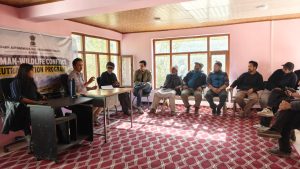
Department of Forest, Ecology and Environment Undertakes Participatory Planning to Address Human–Wildlife Conflict in Drass and Umba.
Kargil, October 1, 2026:
The Department of Forest, Ecology and Environment, UT Ladakh, has initiated a participatory process for preparing Human–Wildlife Conflict Mitigation Plans for areas affected by increasing incidents of brown bear movement into human settlements and attacks on livestock.
As part of the initiative, Participatory Rural Appraisal (PRA) exercises and Focus Group Discussions (FGDs) were conducted with local communities at Drass on September 30 and Umba on October 1. The consultations brought together Lambardars, former PRI members, village elders and youth, providing a platform for residents to share their experiences, identify conflict-risk factors and suggest practical measures suited to local conditions.
The discussions were facilitated by Mr. Raza Ali Abidi, Wildlife Department, and Ms. Rohini Dixit, Young Professional, APCCF Office, Department of Forest, Ecology and Environment. The consultations examined human–wildlife conflict from three interconnected perspectives—mitigation, adaptation and adaptive participatory governance—with the objective of developing solutions that combine departmental interventions with community participation.
Several priority measures emerged from the consultations, including enhancement of compensation for livestock losses, deployment of additional Wildlife Stewards for night patrolling, channel fencing, installation of deterrents and lighting, improved waste management, provision of torches and street lighting, and strengthening of secure livestock housing. The importance of community awareness and adoption of precautionary practices, particularly during night hours, was also highlighted.
The Department emphasised that unmanaged waste can act as an important attractant for brown bears, making responsible waste management an essential component of conflict prevention. Communities were encouraged to strengthen local practices for safe disposal and storage of waste, secure livestock enclosures and maintain greater awareness of wildlife movement in and around settlements.
The inputs and recommendations received directly from the communities will be incorporated into the Human–Wildlife Conflict Hotspot Neutralization Plans currently being prepared by the Department for identified conflict hotspots across Ladakh. The participatory approach is intended to ensure that mitigation measures are grounded in local knowledge and realities, while strengthening the role of communities as partners in wildlife conservation and conflict reduction.
The consultations concluded with community representatives expressing appreciation for the Department’s inclusive approach to addressing human–wildlife conflict. The Department reiterated its commitment to working closely with local communities to reduce conflict risks, improve human safety and livestock security, and promote harmonious coexistence between people and wildlife in the high-altitude landscapes of Ladakh.
This version deliberately presents the Department as working with communities rather than simply responding to conflict, which gives the release a stronger institutional and conservation message while keeping the claims grounded in the original material.