



Government Degree College Nobra officially inaugurated its new academic initiative, “The Silk Route Colloquium: A Thursday Discourse.
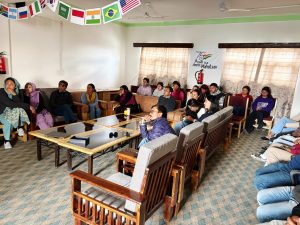
Government Degree College Nobra officially inaugurated its new academic initiative, “The Silk Route Colloquium: A Thursday Discourse,” under the patronage of Principal Rigzin Sangdup at the college seminar hall. A special committee was constituted for the initiative, comprising Dr. Tashi Lundup as Convenor, along with AP Jegmet Sangyas, AP Sonam Angmo, AP Tsewang Lahmo, AP Jigmet Ladol, AP Stanzin Dadul and Dr. Padma Lhamo as members. Conceived as an intellectual platform to foster academic dialogue and cultivate historical consciousness among students, faculty members and staff The colloquium marks an important step toward strengthening critical engagement with the history, literature, culture, and society of the region.
The keynote speaker for the inaugural session was Rigzin Samphel, a former IAS officer and administrator from Ladakh who gave an online lecture on his maiden publication titled: ‘The Land of Gold – A History of Prospecting in the Trans-Himalayas of India’. The book was the result of his research and travels across the region of Ladakh. The programme commenced with an inaugural address by Dr. Tashi Lundup, (Assistant Prof. Sociology) Convenor of the event. Dr Lundup outlined the conceptual framework and objectives of the colloquium. This was followed by a welcome address delivered by Principal Rigzin Sangdup.
During his talk, Rigzin Samphel highlighted the importance of historical research methodologies, trade networks, and documentation in understanding Ladakh’s past. Drawing from his research experience, he emphasized the need to combine secondary literature with extensive primary fieldwork and stressed the urgency of preserving the oral histories of the elderly before they disappear.
Reflecting on Nubra’s historical significance, he noted that the region functioned not only as a trade route but also as a major trade centre, with places like Tangyar serving as hubs for the exchange of salt and wool between the Changpa nomads, Nubra, and Baltistan. He also underlined Nubra’s role in trans-Karakoram trade and the Hajj pilgrimage route.
Encouraging academic engagement, he urged students and faculty members to document the lifestyles, traditions, and economic practices of older generations through structured field research. The programme concluded with an interactive discussion on research methodologies and Ladakhi history, followed by a formal vote of thanks by AP Jigmet Sangyas