



Govt. Degree College, Nobra, Hosts Sixth Lecture of the Silk Route Colloquium: A Thursday Discourse.
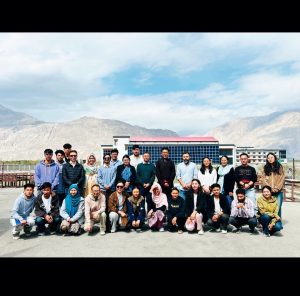
Govt. Degree College, Nobra, Hosts Sixth Lecture of the Silk Route Colloquium: A Thursday Discourse.
Govt. Degree College, Nobra, successfully conducted the sixth lecture of the “Silk Route Colloquium: A Thursday Discourse”, featuring a thought-provoking lecture on the theme “Heritage Conservation and Challenges in Himalaya.”
The programme commenced with an introductory address by Dr. Tashi Lundup, Convener, who briefly introduced the distinguished speaker, Dr. Sonam Wangchuk of the Himalayan Culture and Heritage Foundation. This was followed by a welcome address by Principal Ringzin Sandup, who extended a warm welcome to the resource person and all the participants.
Dr. Sonam Wangchuk delivered an extensive and insightful lecture on the various dimensions of heritage conservation and the challenges confronting heritage preservation across different parts of Ladakh and the Himalayan region. He broadly classified heritage into two categories—tangible and intangible heritage and highlighted the significance of preserving both for sustaining the cultural identity and historical continuity of Himalayan communities.
The speaker drew attention to several endangered forms of heritage in Ladakh that are presently at the verge of extinction. He shared his experiences of successfully reviving and safeguarding various aspects of Ladakhi heritage through active community participation and engagement. Emphasizing the central role of local communities, he argued that meaningful conservation cannot be achieved without involving the people who are the custodians and bearers of the region’s cultural heritage.
Dr. Wangchuk further stressed the need for a comprehensive culture and heritage conservation model or set of guidelines for Ladakh, which could provide a systematic framework for protecting the region’s rich cultural heritage from gradual deterioration and loss.
The lecture was followed by an engaging question-and-answer session, during which participants actively participated in the discussion and raised questions concerning heritage conservation, community participation, cultural preservation, tourism industry, and the challenges facing Ladakh.
The programme concluded with an elaborate vote of thanks delivered by Assistant Professor Jigmet Sangyas, who expressed gratitude to the speaker, Principal, faculty members, and all participants for their valuable contribution to the successful conduct of the event.