



Multi-Stakeholder Workshop on Understanding Human-Wildlife Interactions Held in Drass, DC Drass appreciates the initiative of WWF-India.
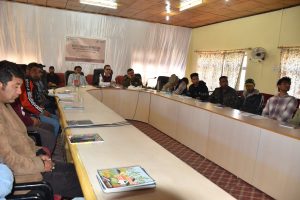
Multi-Stakeholder Workshop on Understanding Human-Wildlife Interactions Held in Drass, DC Drass appreciates the initiative of WWF-India.
September 23, 2026: In a major initiative to strengthen human-wildlife coexistence and community safety, a multi-stakeholder workshop on Human–Brown Bear Conflict Mitigation and understanding human-wildlife interactions was organised in Drass by WWF-India in collaboration with the District Administration and Wildlife Department.
The workshop was attended by Deputy Commissioner, Drass, Imteeaz Kacho (JKAS); Superintendent of Police Drass, Ishtiyaq Kacho (JKPS); Wildlife Warden, Kargil, Mr. Ankit Sinha (IFS); Assistant Professor, GDC-Drass, Dr. Javed Iqbal, Block Veterinary Officer (Animal Husbandry), Dr. Asif Hussain and other officers, former ADC-Kargil Barkat Ali Nizami, Lambardars of various villages, representatives of Himalayan Brown Bear Trust and Wildlife & Nature Trails, stake holders, researchers and wildlife enthusiasts. WWF-India was represented by Mr. Preet Sharma, Senior Project Officer; Mr. Manu Mohan, Senior Project Officer and Mr. Mohd Kazim, Project Officer.
During the workshop, the Deputy Commissioner sought detailed information regarding the population, distribution and movement patterns of Himalayan brown bears in Drass. Researchers informed the participants that significant brown bear presence has been recorded in the Mushko Valley and other parts of Drass District. The researchers also shared findings from their extensive field studies and explained the technical interventions required for effective conflict mitigation.
The experts briefed the participants about the behaviour and feeding patterns of Himalayan brown bears. It was explained that brown bears generally tend to maintain distance from humans. However, while searching for food, they may enter settlements and cause damage to livestock, poultry, stored dry ration and other property, it was added. Seasonal changes in their food habits and movement were also discussed in detail.
Local representatives shared their experiences of bear-related losses, particularly involving livestock and poultry, with some residents highlighting how repeated incidents have discouraged households in vulnerable areas from keeping poultry. The participants also raised concerns regarding property losses and the safety of settlements situated close to bear habitats.
The workshop discussed several practical conflict-mitigation measures, including installation of focus lights in vulnerable locations, early-warning mechanisms, stronger protective corrals for livestock and poultry, proper storage of dry ration, improved waste management and systematic tracking and monitoring of bear movements.
The visiting researchers presented detailed observations from their work on Himalayan brown bears and stressed the importance of scientific monitoring, technical support and community participation. The discussions emphasised that site-specific measures are essential, as the nature and intensity of human–bear conflict may vary from one village to another.
Wildlife Warden, Kargil, Ankit Sinha, highlighted the need for evidence-based interventions and coordinated action between the Wildlife Department, local administration, researchers and communities. Issues concerning compensation for livestock and property losses were also discussed during the interaction.
Superintendent of Police Drass, Ishtiyaq Kacho (JKPS), shared observations regarding bear movement and incidents of poultry depredation and emphasised strengthening village-level awareness and community safety measures.
In his address, the Deputy Commissioner appreciated the research and field interventions undertaken by WWF-India and other experts. He stressed that conservation efforts should simultaneously protect the Himalayan Brown Bear and the livelihoods and safety of local communities. Further, he highlighted the major transformation in perception of residents of Drass vis-à-vis coexistence with wildlife especially the Himalayan Brown Bear. He pointed out the need for building an entire economy around the conversation of this elusive and much-loved animal. He thanked the organizers for bringing all stakeholders together under one roof to discuss policy matters, mitigation measures, need for coordinated efforts and steps for behavioural change.
Recognising the Himalayan Brown Bear as an important part of Drass’ natural heritage, the Deputy Commissioner also highlighted the potential of organising a Brown Bear Festival in Drass to promote conservation awareness, community participation, scientific understanding and responsible nature-based tourism.