



Training Programme on Census 2027 Phase-II Held for District Officials in Leh.
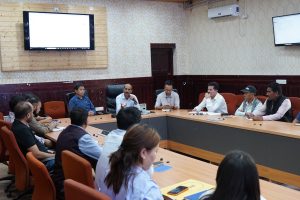
Training Programme on Census 2027 Phase-II Held for District Officials in Leh.
Leh, August 10, 2026: A training programme for District and Charge Officials of District Leh, UT of Ladakh, was conducted at the Conference Hall of the DC Office, Leh, as part of the preparations for Census 2027 Phase-II, with the objective of strengthening the preparedness of officials and ensuring accurate and comprehensive enumeration across the district.
During the training, Shri Jatinder Kumar, ADCO and Nodal Officer for Census 2027 in the district, delivered detailed presentations on key concepts, definitions and procedures related to the census enumeration process. In his first presentation on “Concepts & Definitions: Who Gets Enumerated and Where,” he briefed the participants on Enumeration Blocks (EBs), buildings and their usage, census houses and the distinction between buildings and census houses, including cases where one building may contain several census houses.
The presentation further covered the definition and types of households, including normal households, institutional households and houseless households, along with practical explanations for better understanding. Other aspects covered included Paying Guest (PG) accommodation, procedures when the houseless population is too large for one enumerator, ensuring complete coverage, identification of persons normally residing at a particular location, enumeration of foreigners and diplomats, protocols for nomadic and transit populations, identification of the head of household, recording the head of an institutional household, house numbering and common scenarios regarding where individuals are to be counted.
The Nodal Officer also delivered a second presentation on “Census 2027 Phase-II – Questions to be Asked,” providing an overview of the information proposed to be collected during the second phase of enumeration. The presentation covered basic demographic particulars, including name of the person, current marital status and age at marriage; spouse’s name, nationality as declared, religion and Scheduled Tribe/Scheduled Caste details, along with common errors in recording caste. It also covered father’s and mother’s particulars; disability-related information, including the importance of disability data and the nine categories of disabilities; mother tongue and other languages known; and education and literacy, including literacy status, digital literacy status, attendance at educational institutions, highest level of education and stream.
The presentation further covered economic activity, including whether a person worked at any time during the last year, category of economic activity, occupation and industry, class of worker, non-economic activity, seeking work and travel to work. Detailed information on migration was also discussed, including what constitutes migration, place of birth, place of last residence, duration of stay and permanent address. The session also covered fertility and other related particulars to be collected during the census.
The training session also covered the Abridged House List (AHL), including its generation and the process through which it will be updated during Phase-II, enabling officials to understand its role in ensuring systematic and comprehensive enumeration.
The training provided an interactive platform for participating officers to raise their queries and doubts regarding the enumeration process. Officers also highlighted various practical issues and challenges being faced in the field, particularly concerning house numbering and the proper recording and numbering of household members. The issues were discussed during the session to facilitate greater clarity and uniformity in the implementation of census procedures.
The training emphasised the importance of complete coverage, accurate recording and uniform application of census definitions and procedures to ensure the successful conduct of Census 2027 Phase-II in the district.
The programme was attended by Chief Planning Officer, Leh, Konchok Gyalson; Census District Prabhari, Tashi Otsal; Chief Executive Officer, Municipal Committee Leh, Stanzin Rabgyas; SDMs from various areas of Leh district; and other concerned officers.